Code Generation
code generation
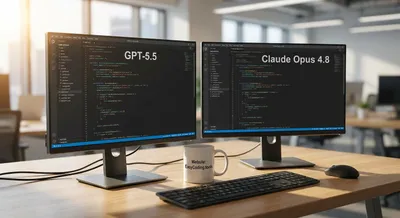
GPT-5.5 vs Claude Opus 4.8: Which Model Is Better for Agentic Coding Workflows?
Anthropic’s Claude Opus 4.8 is pitched as a “more effective collaborator” for coding projects. Anthropic’s previews note that 4.8 outperforms its own...

Sweep AI: Issue-to-PR Automation in Public Repositories
Sweep was launched by founders William Zeng and Kevin Lu (both ex-Roblox engineers) through Y Combinator in 2023 (). It is designed for teams and...
Code Generation
Code generation means using tools to automatically create source code from higher-level inputs like templates, examples, specifications, or plain-language descriptions. It ranges from simple tasks—such as producing boilerplate classes or configuration files—to more advanced uses where a system writes entire functions or modules. These tools can live inside editors, be part of build systems, or run as cloud services, and they often aim to save time by removing repetitive manual work. For many users, code generation is a way to turn an idea or requirement into executable code quickly, helping with prototyping and routine development tasks. The reason it matters is that it can greatly speed up development, reduce human error in repetitive patterns, and help newcomers learn by example. However, generated code is not automatically correct or secure: it can include bugs, inefficient logic, or licensing problems, so human review and testing remain essential. Teams need to pair generation with good practices like writing tests, checking security, and documenting assumptions. Used responsibly, code generation boosts productivity and lets developers focus more on design and higher-level problems instead of tedious details.
Get New AI Coding Research & Podcast Episodes
Subscribe to receive new research updates and podcast episodes about AI coding tools, AI app builders, no-code tools, vibe coding, and building online products with AI.